But how can we measure the distance of such chunks of iron and rock from the Earth? Abdurrahman M. from the high school Laurentianum in Warendorf/Germany tackled this question and successfully presented his results in the geosciences and spatial sciences category of the regional “Jugend forscht 2023” competition. In his work, he impressively demonstrates that he can remotely measure the respective distance with astonishing accuracy using the ten 40 cm telescopes of the Las Cumbres Observatory (LCO) distributed around the Earth from his hometown Warendorf. The guaranteed errors were less than 1%. Abdurrahman was able to put the statistics and vector algebra he had learned at school to good use and won 2nd place in this category.
The topic was no coincidence. In the astronomy project course, Abdurrahman, supported by physics teacher Tobias Schuldt, worked intensively on astronomical issues. In summer 2023, he took the opportunity to take part in the four-day STEM camp “Astronomy 2.0” organized by Astronomy and internet in Münster/Germany (AiM) and learned how to independently program robotic telescopes from any digital device as part of the Faulkes Telescope Project/Cardiff/UK (FTP). Here he also met Paul Breitenstein, the head of AiM, who always had an open ear for Abdurrahman’s questions and supported him tirelessly during the many weeks in which he devoted himself to his youth research topic.
]]>
FT North has run for a few years with MuSCAT3 (Multicolor Simultaneous Camera for studying Atmospheres of Transiting exoplanets) and now MuSCAT4 has replaced the Spectral camera on FT South.
These cameras are identical and both provide the opportunity to collect data simultaneously in 4 filters. These filters are the Sloan/SDSS g’ r’ i’ filters and zs filter. The g’ and r’ filters can be thought of as green (or maybe blue/green) and red with the i’ and zs moving us toward the near-infrared part of the electromagnetic spectrum.
The default mode in queue-scheduled observations will allow our users to select a single exposure time where the camera will observe in each filter at the same time, making it much more efficient. More advanced users can select exposure times for the filters independently should they wish.
In real-time mode, only g’ r’ i’ are available as has been the case on FT North for a while now.
]]>The 3 year project brings together expertise from INAF (Italy), COSPAR (France), EA (Greece), FTP Europe (Germany) and NUCLIO (Portugal) and we will develop a toolkit containing materials, resources, and activities, and train teachers to use the toolkit with their students.
Watch this space for more news as we begin the project and get teachers onboard!
]]>In order to sow the seeds of this new series, we are pointing our lenses to Oradea, Romania. Here, physics teacher Valentina Matei from Dacia Secondary School, runs an after school club of Astronomy and Astrophysics. Valentina herself attended various events all over the globe, where she had the opportunity to develop and improve her skills as a “space educator”.
During the club’s sessions, she makes use of the Faulkes Telescopes to make observations which her students will then study and analyse. They have observed a wide array of celestial bodies, from clusters and galaxies all the way to comets and asteroids.
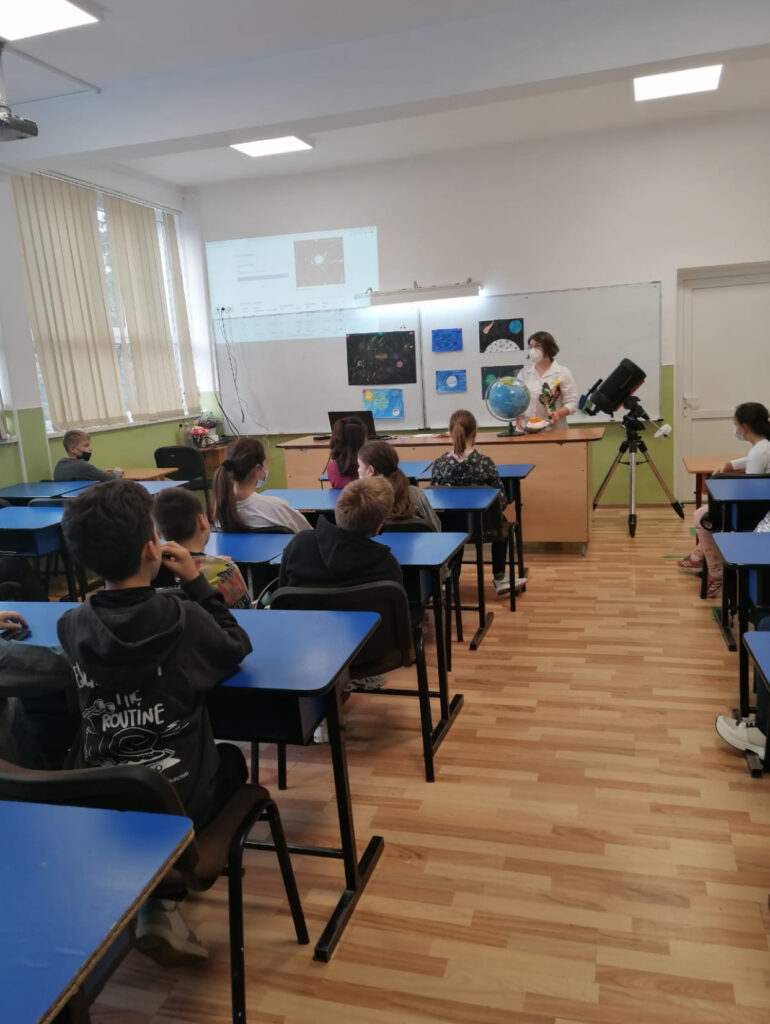
Valentina and her students during one of the Astronomy and Astrophysics club meetings.
“Faulkes Telescope Project is an outstanding program that motivates my students to learn astronomy, study celestial objects, and analyze their own pictures” said Valentina and the results speak for themselves. One of her students, Edi Herman received numerous prizes for his results at different Astronomy contests, including a bronze medal at the National Olympiad of Astronomy and Astrophysics organised by the Romanian Physics Society.
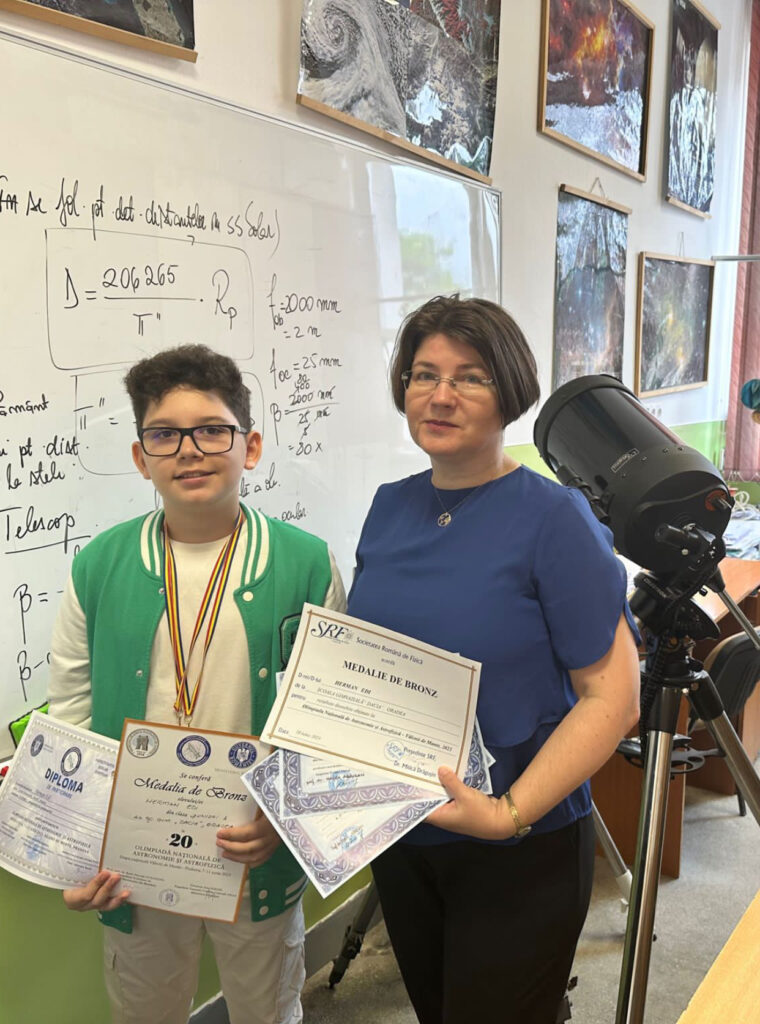
Valentina and her student, Edi, holding some of their diplomas.
Concluding our journey with Valentina Matei in Oradea, Romania, we glimpse the passion and achievements that flourish within our Faulkes Telescope Project community. This is merely the beginning of ‘Celestial Trailblazers,’ a series poised to unveil more captivating narratives that span the cosmos. As we shift our focus to the next chapter, we encourage you to step into the spotlight and share your own cosmic tale. Together, we’re painting a vivid portrait of exploration, one star at a time.
]]>It’s a feeling of indescribable joy when our users from around the globe update us on their work and how our tools manage to shape the world and the minds of the future!
Going to Catalonia this time, FTP in Catalan High Schools is a project coordinated by Toni Santana-Ros from the University of Barcelona. Their aim is to leverage all the resources provided by FTP not only to offer unique experiences for their students, but also to create educational material for their subjects. This enables the student to improve a varied set of skills from Maths, Physics and Computer Sciences to teamwork, listening and writing.
Currently, the project encompasses 6 high schools (Institut D’Alcarràs, Institut Dr. Puigvert, Institut d’Altafulla, Institut Guindàvols, Institut Josep Lladonosa, Institut-Escola Les Vinyes), but they expect more to join over the next period of time. Since the project started in 2021, more than 400 pupils from the selected high schools have taken advantage of our platform by either making their own observations or using the LCO data repository. Some of the intriguing work the students carried out last year can be seen in detail here. They also engage in different campaigns that we run such as the Outburst Campaign of Comet 29P.
As the FTP network grows in Catalonia, bi-annual meetings are being organised in order to discuss the work done and future plans.
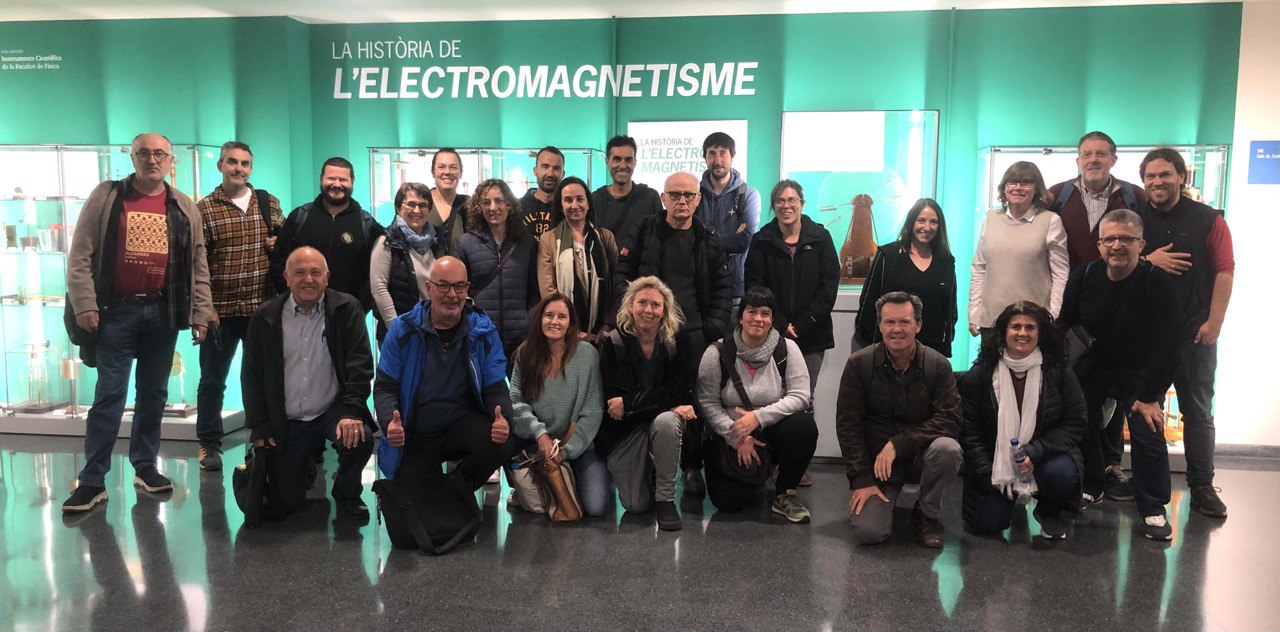
Picture taken after the last meeting of the group.
Here at FTP, we are thrilled to see their work coming together and what their students manage to accomplish! Looking forward to hearing about their future achievements!
]]>
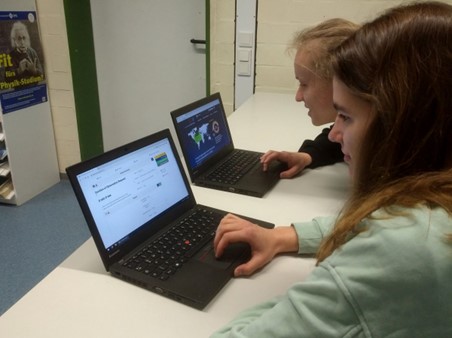
Hannah and Fred using the LCO interface to access the telescopes
However, using the research telescopes of the LCO network, the students were able to catch a glimpse of the comet’s distinct green glow. In order to do so, they took three images with a red, green, and blue filter and put them together in an RGB composite. The result is a beautiful image showcasing the unique green glow of the comet’s coma, formed when volatile components evaporate near the Sun.
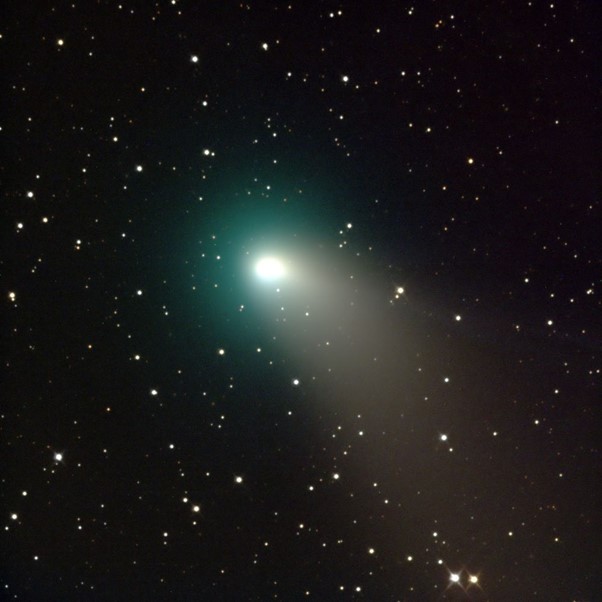
The image generated by Hannah and Fred of the Comet C/2022 E3
The green colour of the comet is likely caused by carbon, which is energetically excited by sunlight. The corresponding spectral line of C2 molecules is at 518 nm, an amazing illustration of the principle the students learned in their physics class. According to astronomers, the last time C/2022 E3 may have been close to Earth was about 50,000 years ago, and it is uncertain if it will ever be seen again due to the gravitational interactions during its current visit to the inner solar system.
The discovery by these high school students is a testament to the power of scientific curiosity and the potential of young minds to make meaningful contributions to the world of science. Their discovery of Comet C/2022 E3’s unique green glow has sparked interest among students and teachers alike, and it will undoubtedly inspire others to explore the wonders of our universe.
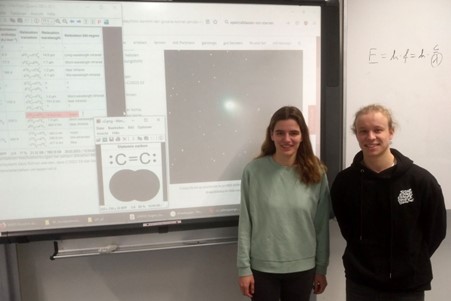
Hannah and Fred standing by their image and the formula they used to calculate the wavelength of the spectral lines of the C2 molecules
 Via our parent organisation, the Dill Faulkes Educational Trust (DFET), we at the Faulkes Telescope Project are proud to be leading an EU Erasmus+ project called LaSciL.
LaSciL stands for Large Scientific infrastructures enriching online and digital Learning and aims to support high quality science teaching, through the use of data archives and innovative online tools.
Along with our colleagues in Greece, Portugal and Austria, we are supporting teachers in using these tools to:
-
create educational resources for students in open and distance learning;
-
manage large numbers of students in an online environment and keep them motivated to participate;
-
personalise teaching practices based on students’ needs.
As with many EU projects, LaSciL will is running a couple of ‘summer schools’. In 2022, we were lucky enough to visit Heraklion in Crete. In February 2023, it will take place in a dark sky reserve called Alqueva in Portugal. We have funding to provide UK teachers with flights and accommodation for these weeklong trips so if you’re interested, please contact us.
More details can be found here for the project (https://lascil.eu/) and the summer school (https://esia.ea.gr/lascil-winter-school-2023/).
Or contact us for more details by emailing fraser.lewis (at) faulkes-telescope.com

Known for its explosive personality, comet 29P/Schwassmann–Wachmann is causing quite a stir. A few weaker outbursts have been detected over the past few days as seen in the latest lightcurve (Figure 1).
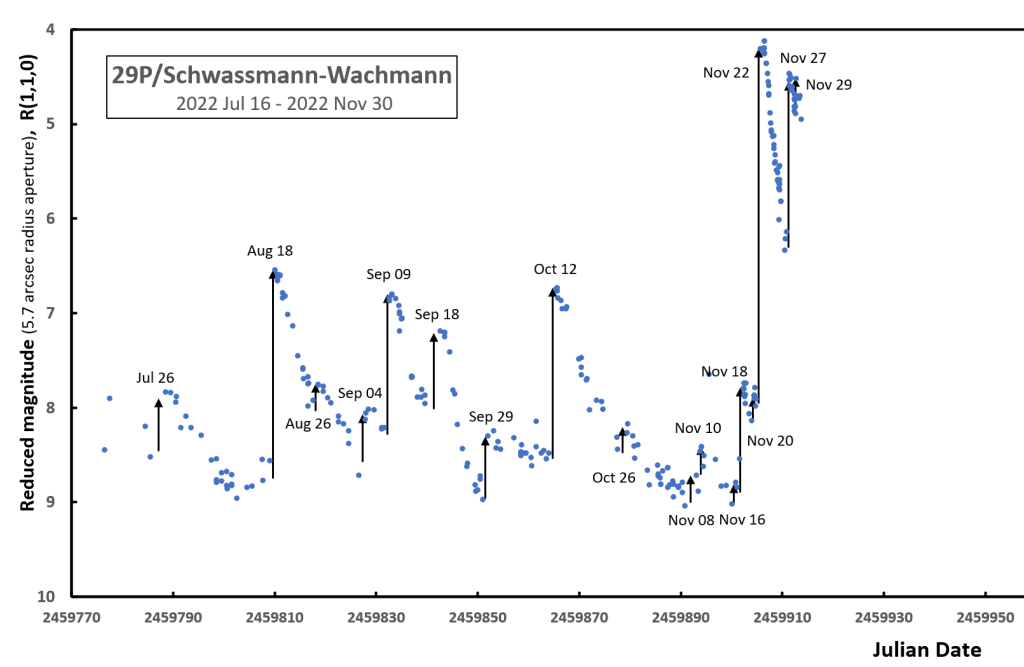
Figure 1. 29P/Schwassmann-Wachmann comet lightcurve
The outburst of the 29th of November was detected thanks to imaging by Ben Wooding at St Mary’s School in Bridgend, Wales. Image processing of the latest 1.0-m exposures from Las Cumbres Observatory, Chile, confirmed this new strong outburst. In other words, a further cryo-eruption was triggered.
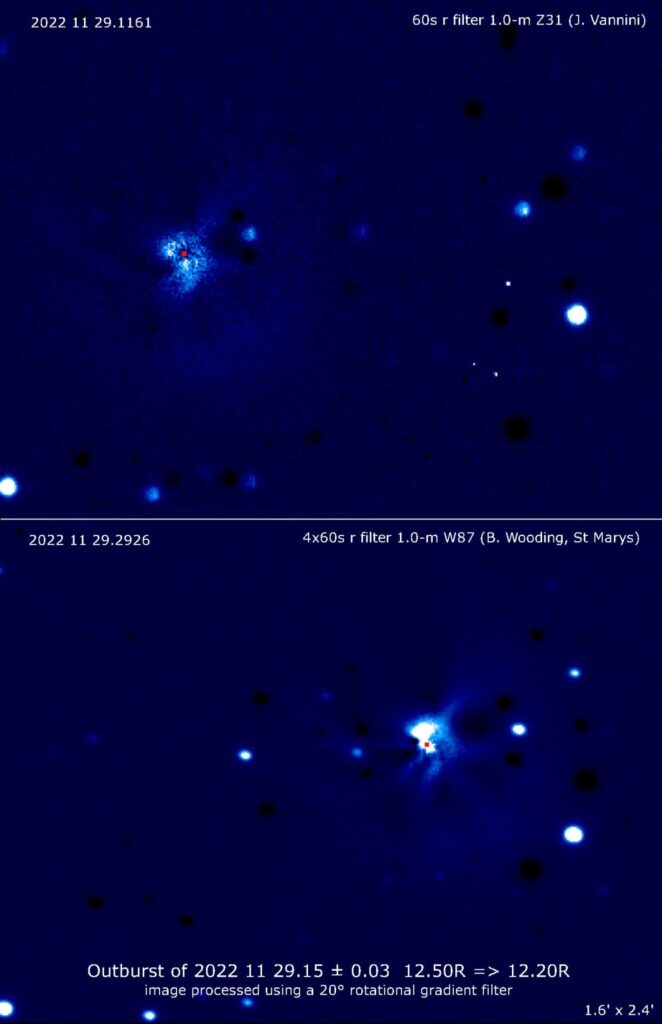
Figure 2. Top image by Julio Vannini, bottom image by Ben Wooding
What is remarkable is that the lower image in Figure 2 shows a new fan-shaped feature extending to about 3 arcsec from the nucleus, yet this appeared only 2-3 hours after this eruption began. To do this, the leading edge must have travelled at speeds up to about 1.0 km/s projected on the sky. This makes this latest event unusual and suggests that it is gas-driven from a relatively warm source at around 70-90 K.
Moreover, is that the brightening of November 29 was rather short-lived. This is something that might have been missed in the past.
We need URGENT help with observations. While the 2.0-m Faulkes Telescope North is affected by bad weather and nearby volcanic activity, do continue to use the 1.0-m telescopes and the 2.0-m telescope from Faulkes Telescope South. An exposure of 60s will work well.
If any help is needed setting this up, please contact one of the people below:
Helen Usher – helen.usher@open.ac.uk
Cai Stoddard-Jones – Stoddard-JonesIC@cardiff.ac.uk
Richard Miles – rmiles.btee@btinternet.com
all of whom will happily assist!
More information can be found by following this link:
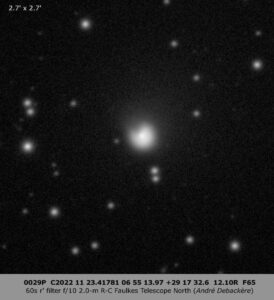
]]>Comet 29P is causing some excitment again! This time with an outburst taking its R magnitude from 15.7 to 11.95. (This is the second biggest outburst in the last 12 years – see web link below).
You can help monitor how it develops by making observations for Richard Miles as part of the BAA Mission 29P campaign. The best observations will be 60s with the 2m Muscat Faulkes North telescope. This would be a great target if you have an RTI slot. You can also schedule with the 1m telecopes – the SDSS rp filter is best. Again an exposure of 60s will work well.
Your data will then be added to the BAA website – the picture below is from an FT user. MISSION 29P – Centaur comet observing campaign
If you would like help to set this up then just contact:
Helen Usher – helen.usher@open.ac.uk
Cai Stoddard-Jones – Stoddard-JonesIC@cardiff.ac.uk
or Richard Miles – rmiles.btee@btinternet.com
who will happily assist!
In the morning, we’ll be discussing the EU project CliC-PoLiT which examines the role astronomy can play in challenging the issues around climate change and light pollution.
In the afternoon, we’ll look at how teachers can make the most of the free telescope time and resources that the Faulkes Telescope Project provides to teachers and educators worldwide.
The timings are as follows …
Lichtverschmutzung (Light Pollution), EU-Projekt, CliC-PoLiT
9:00 – 9.15: Welcome / warm up (Lothar Kurtze, Martin Metzendorf)
9:15 – 10:00: Classroom activities about light pollution, how to evaluate light pollution by observing stars (Gustavo Rojas)
10:00 – 10:15: Coffee break
10:15 – 11:00: Earth at night: workshop with images from ISS (Lothar Kurtze, Jenny Brüggler)
11:00 – 11:45: How dark is the sky at the LCO observatories? Classroom observations with the Las Cumbres Observatory (LCO) 0.4-m Network (Fraser Lewis)
11:45 – 12:00: Discussion / final words (Lothar Kurtze)
Workshop Faulkes Telescopes, Arbeiten mit den über Internet gesteuerten Teleskopen
13:00 – 13.15: Welcome / warm up (Lothar Kurtze, Martin Metzendorf)
13:15 – 13:45: Workshop 1: How to plan an observing session (Fraser Lewis)
13:45 – 14:15: Workshop 2: Observing with the FT/LCO telescope network (Lothar Kurtze)
14:15 – 14:30: Coffee break
14:30 – 15:00 Workshop 3: How to use the image archive (Fraser Lewis)
15:00 – 15:30: Spectroscopy (Herbert Pühringer)
15:30 – 16:00 Discussion / final words (Lothar Kurtze)
For more information, please contact Lothar via e-Mail: FTP-Europlanet@online.de
]]>