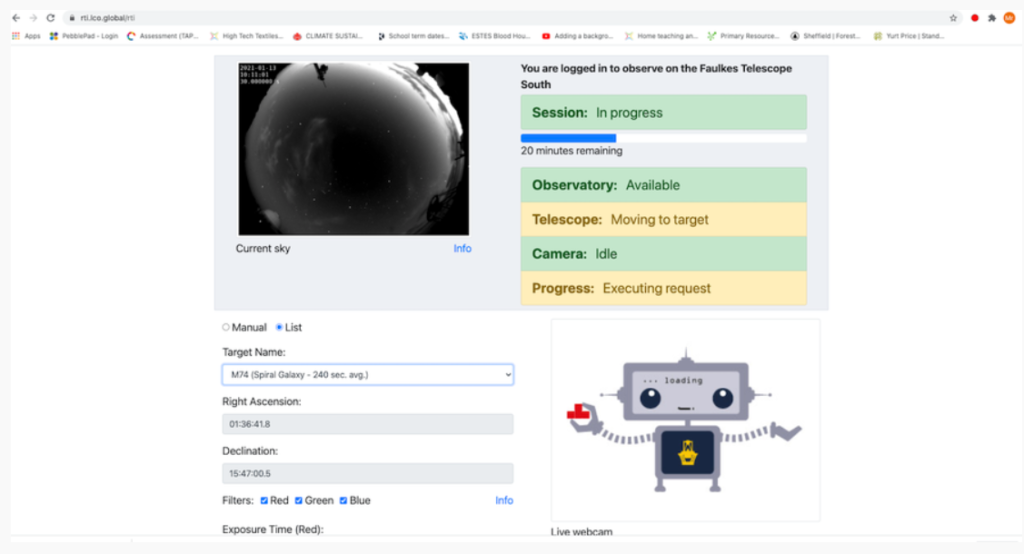
In order to sow the seeds of this new series, we are pointing our lenses to Oradea, Romania. Here, physics teacher Valentina Matei from Dacia Secondary School, runs an after school club of Astronomy and Astrophysics. Valentina herself attended various events all over the globe, where she had the opportunity to develop and improve her skills as a “space educator”.
During the club’s sessions, she makes use of the Faulkes Telescopes to make observations which her students will then study and analyse. They have observed a wide array of celestial bodies, from clusters and galaxies all the way to comets and asteroids.
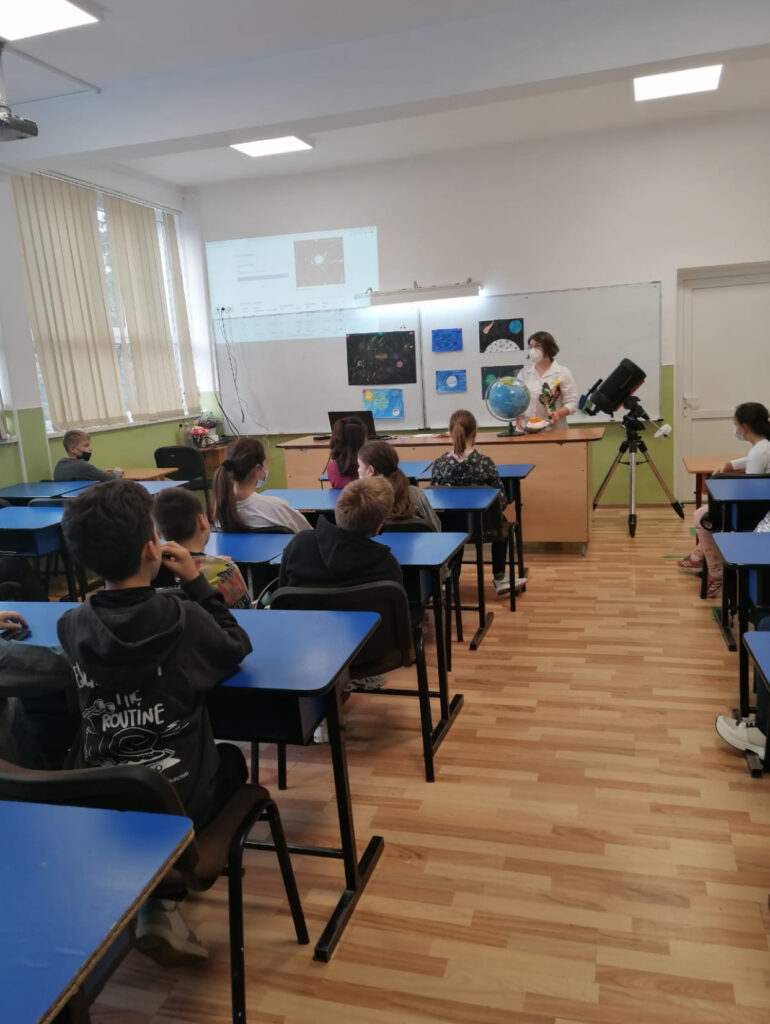
Valentina and her students during one of the Astronomy and Astrophysics club meetings.
“Faulkes Telescope Project is an outstanding program that motivates my students to learn astronomy, study celestial objects, and analyze their own pictures” said Valentina and the results speak for themselves. One of her students, Edi Herman received numerous prizes for his results at different Astronomy contests, including a bronze medal at the National Olympiad of Astronomy and Astrophysics organised by the Romanian Physics Society.
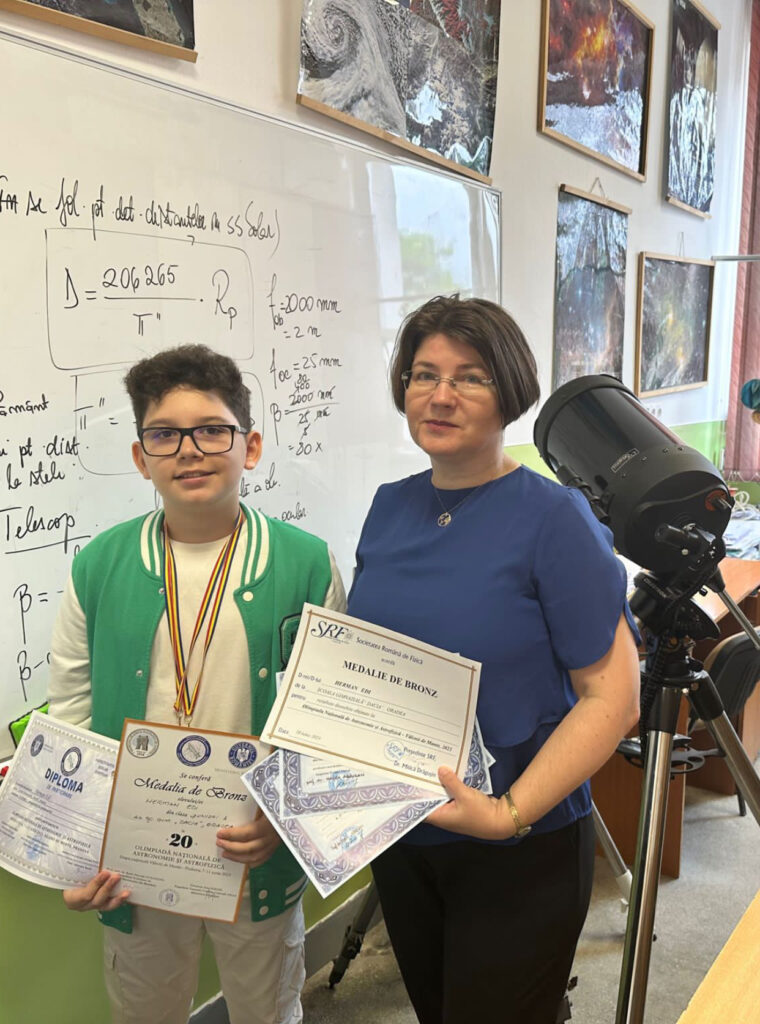
Valentina and her student, Edi, holding some of their diplomas.
Concluding our journey with Valentina Matei in Oradea, Romania, we glimpse the passion and achievements that flourish within our Faulkes Telescope Project community. This is merely the beginning of ‘Celestial Trailblazers,’ a series poised to unveil more captivating narratives that span the cosmos. As we shift our focus to the next chapter, we encourage you to step into the spotlight and share your own cosmic tale. Together, we’re painting a vivid portrait of exploration, one star at a time.
]]>Interacting Galaxies
During the first term this year, students in the Nottingham High School Astronomy Club and Year 9 used the robotic telescopes to observe galaxies in the process of colliding. Students took new images of interacting galaxies such as M51 and NGC 7318 (part of Stephan’s Quintet) using the real-time interface and the observing portal. This was particularly challenging since many of the galaxies we observed are very faint like NGC 6050 in Figure 1 and require very long exposure times
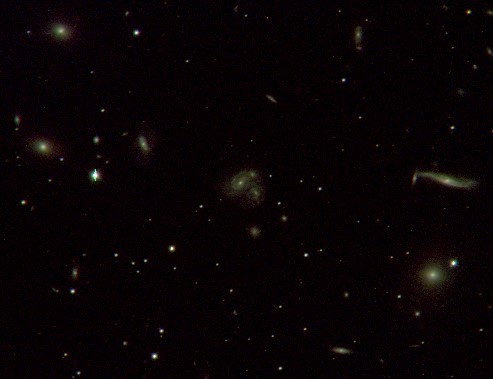
These images formed the centre of a Year 9 class activity during their Astrophysics topic. The students were given the red, green, and blue FITs files and shown how to create a colour image using an online FITs editor. Students classified the interacting galaxies as about to merge, merged, or already merged!
This facilitated lots of interesting discussions about the Physics behind galaxy mergers, galaxy evolution, and what happens when two black holes collide.
Comets
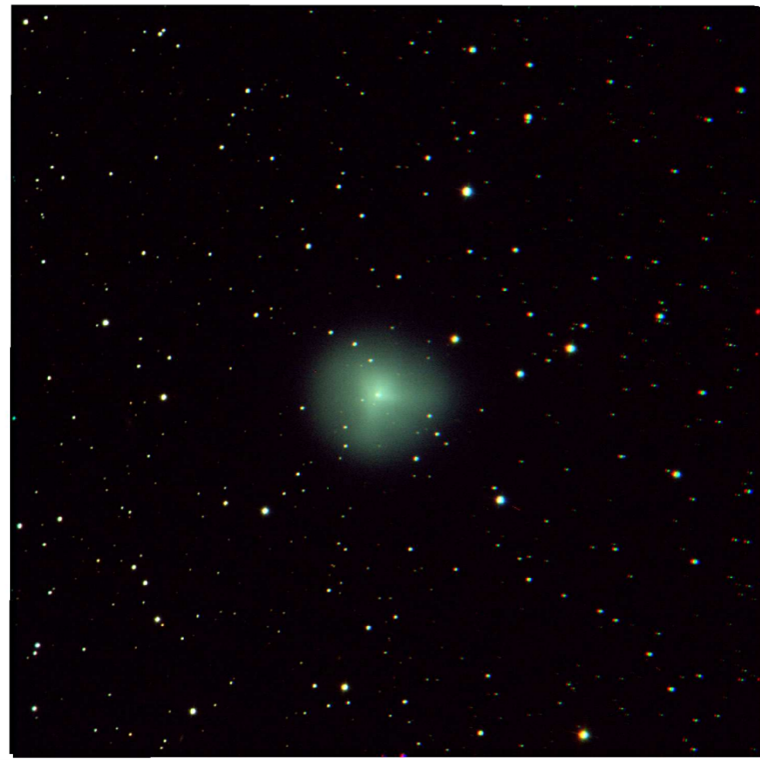
Last September schools were asked by the Faulkes Telescope Project to observe the Comet 29P/Schwassmann-Wachmann which had suddenly increased in activity, making it much brighter in the night sky. Our students readily accepted this challenge and managed to observe Comet 29P on two occasions using the 2-metre robotic telescope and another Comet (17P) undergoing a similar outburst.
We took this opportunity to learn about comets and made a model comet out of dry ice for our celebrations during World Space Week. Figure 2 shows one of our Comet images taken by our students.
A Level Astrophysics
As part of our Year 13 instruction, some students had the opportunity to use one of the telescopes during our daylight hours. After a few attempts at getting the telescope to face the live webcam the students could see the structure of the telescope was just like they had learnt about in class. Students had the opportunity to observe many of the objects we had been talking about throughout the course.
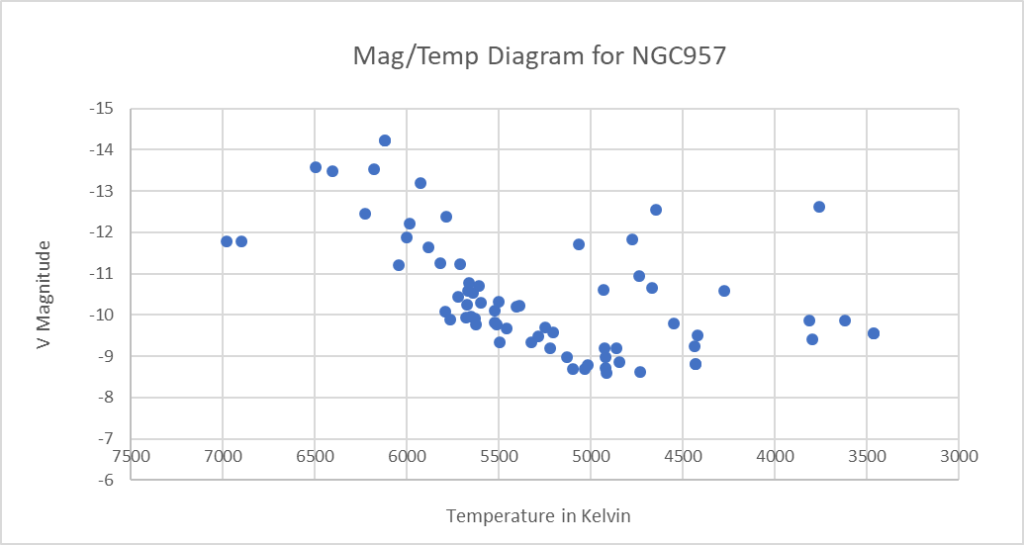
We then used data from the observatory archives to create our own colour-magnitude diagrams. Figure 3 shows a colour-magnitude diagram where the colour axis has been converted to temperature. Students were able to learn all about photometry and use special software to extract the magnitudes of stars in their chosen open cluster.
The experience of using the telescopes and creating images from them is invaluable for our students. As a Year 9 said “Wow, is that real?”. One of our younger Year 7 students said “The telescope was legendary, it took a beautiful image. It was super precise, allowing us to exactly see galaxies and all their features. The best telescope I have looked through.”
]]>
Much more happens in the sky every night than one might suspect with the naked eye. For instance, numerous automated observation programmes (e.g. Pan-STARRS on Hawaii’s Haleakala or the space-based WISE) continuously scan the sky for previously unknown objects that are potentially very close to Earth or even on a collision course.
The data obtained worldwide is then collected at the Minor Planet Center (MPC), and other observers are called upon to confirm the new discoveries and make supplementary measurements to predict the future orbit of such objects as accurately as possible.
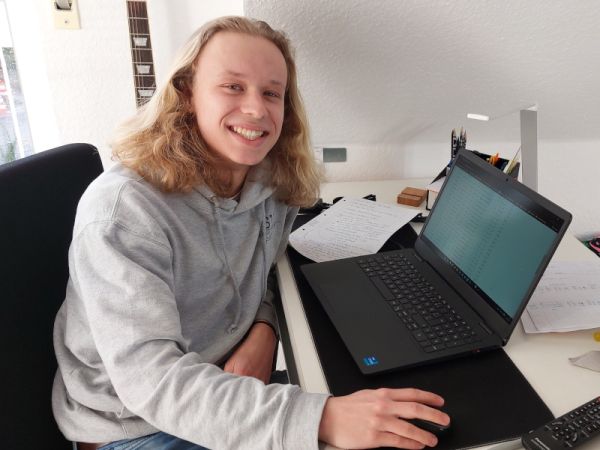
With the help of the Faulkes telescopes, it is possible for students to participate in this process and do real science. This is what Fred Alke (Figure 1) from the Oberstufe (corresponds to sixth form) of the Gymnasium Nepomucenum (Coesfeld, Germany) did in the context of a research project. In order to plan his observations, he first had to clarify which candidates from the MPC catalogue of objects currently in need of confirmation could be observed at all during his respective RTI (real-time interface) slots. This depends not only on the predicted position in the sky, but also on an acceptable signal-to-noise ratio: many of these objects move quite quickly and are relatively faint, which makes observation a challenge.
As a second step, Fred then analysed the obtained images. The usual procedure is as follows: first, with the help of suitable software, these images have to be aligned using the known positions of the stars they are containing. Then one can determine the position of the object of interest with a high degree of precision. After having done so, these measurements were transmitted by Fred to the MPC in a predefined format.
This way, Fred succeeded, among other things, in confirming the position of a new object, which has now been designated 2022 BJ6 and which turned out to be a Mars-crosser (an asteroid with an orbit that crosses Mars’ orbital path). One of the other objects he measured subsequently turned out to be the rediscovery of the already known main belt asteroid 2009 CH53. Fred’s measurements are published in the MPC’s official scientific publication, the Minor Planet Circulars.
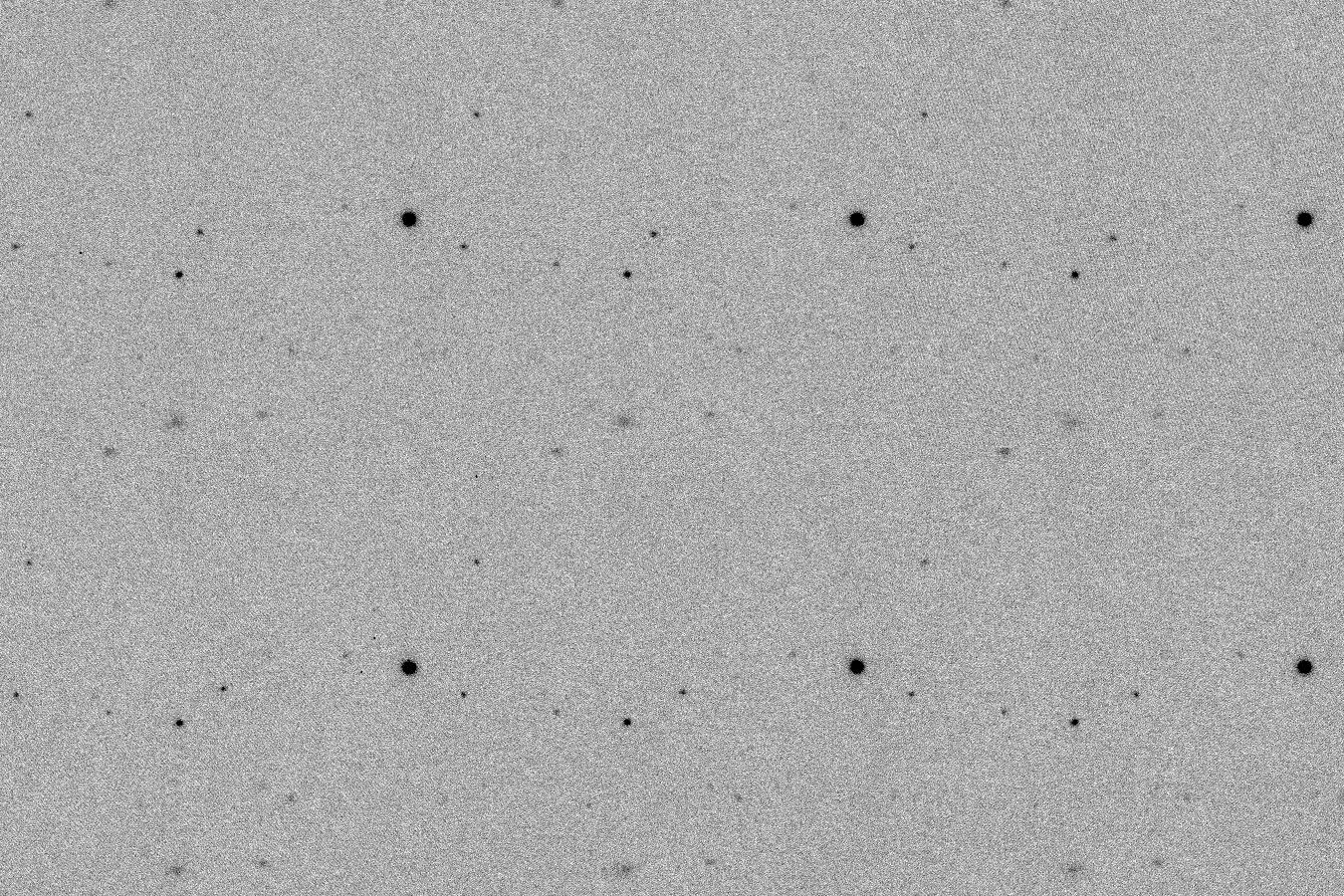
Another example vividly demonstrates that these activities have scientific relevance indeed: Fred’s attempt to observe the object 2022 CO6 failed at the position initially predicted. However, this prediction was based on only three WISE observations with an arc of a few minutes – no wonder that the orbital uncertainties were then still quite large. A few days later, after further observations of the object had been done, with the help of the updated ephemeris it turned out that at the time of observation it was probably just outside the field of view, which at about 9’x9′ is not too large with the Faulkes telescopes.
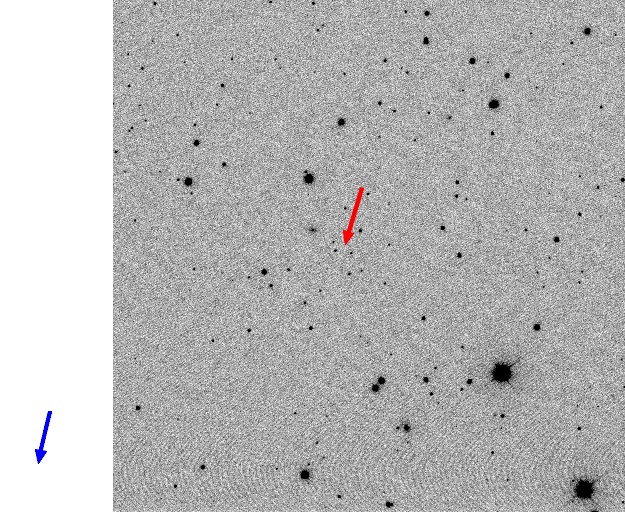
All in all, it can be said that the use of the Faulkes telescopes provides students with the possibility to work on authentic science, which definitely creates impressive experiences for them.
]]>Children from four Welsh primary schools who are helping astronomers study a strange solar system object are now very excited to see their observations featured in a research paper recently published in the prestigious Astrophysical Journal.
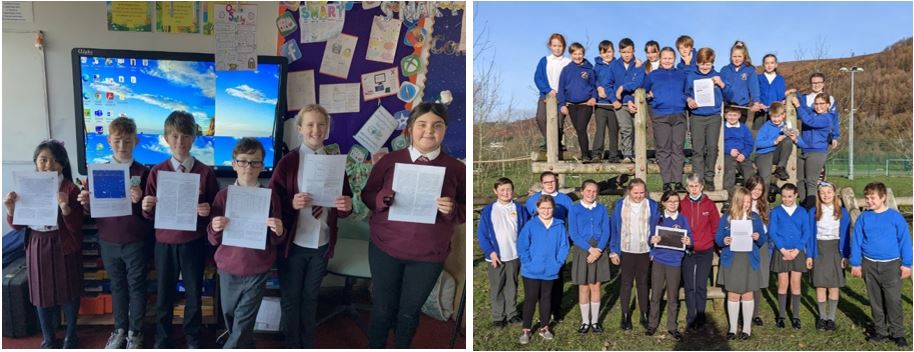
They are part of an innovative science education project called ‘Comet Chasers’ which links schools with professional comet scientists and amateur observers, around the world. Working with the Faulkes Telescope Project, schools have been observing and measuring the asteroid 2005 QN173 which developed an unusually long tail, a very rare behaviour normally only associated with an icy comet.
Children from St Mary’s Catholic Primary School in Bridgend, Ynysowen Community School, and Mount Street School in Brecon made research observations using the 2-metre Faulkes Telescope North in Hawaii. Montgomery Church in Wales School in Powys is helping with the ongoing observations. The specific observation parameters were agreed with Dr Henry Hsieh from the Planetary Science Institute in the USA, who is leading an international study of this strange object.
Dr Hsieh is the lead author on the new paper, with the Comet Chasers team as some of the co-authors. Dr Hsieh is very grateful for the data provided by the young Welsh astronomers: “The Faulkes Telescope observations collected by the Comet Chasers students really helped our study thanks to some of the unique capabilities of the telescope, and the speed of response to requests for observations”, he said. “We’re very happy to have these students and their teachers and mentors be able to make real contributions to this research and are looking forward to continuing working with Comet Chasers students in the coming year.”
Mr. Wooding is a teaching assistant at St Mary’s, Bridgend, and is a co-author on the research paper. He commented “The children at St. Mary’s Catholic Primary School are very excited to play a part in the data collection for asteroid-comet 248370. We’re very grateful to Helen Usher and the Comet Chasers project for giving our children the opportunity to undertake real science using professional astronomical equipment for the collection and analysis of important and significant data.“
The children at Ynysowen said they loved every minute of the Comet Chasers project. “Having total control of a big telescope was so much fun”. They were so excited to see the observations they have made being used for finding out more about this strange object, and particularly seeing their school’s name in the paper!
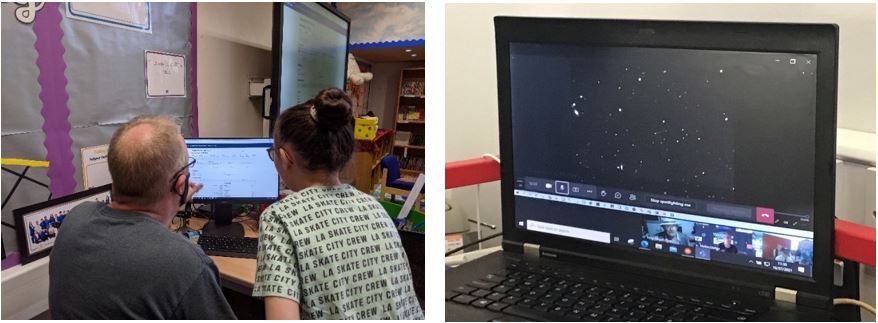
The newly published research reveals more details of this intriguing object, now re-classified as a Main Belt Comet (Comet 433P) as it shares characteristics of both a Main Belt asteroid and an icy comet. Discovered in 2005, it appeared to be a typical asteroid in the Main Belt of asteroids between Mars and Jupiter – looking like a moving, star-like point of light. But this year its appearance was completely different, as it developed a thin straight tail. Such objects are rare – only 20 have been observed so far.
These objects are interesting because a substantial part of Earth’s water is thought to have been delivered via asteroid impacts when the Earth was being formed. The observed activity of these objects means they are likely to still contain ice. They therefore offer a way to test this hypothesis and to learn more about the origins of life on Earth. We are learning more about the abundance, distribution, and physical properties of icy objects in the inner Solar System.
The research suggests that the nucleus of 433P is about 3.2 km across and is surrounded by a dust cloud. In the children’s observations, the tail was measured as over 720,000km long, but just 1,400km wide. The narrow tail tells scientists that the dust is barely floating off the nucleus at very slow speeds. The flow of gas (which usually is the cause of dust escaping a comet) is very weak, which raises questions for future study: ‘What is causing the dust to escape?’ ‘Is it a fast-rotating object flinging off material from its surface?’. The Welsh Comet Chasers are continuing to make observations, and so they will be helping to try to solve these mysteries too.
There is more excitement to come too. The Comet Chasers schools are observing other comets for different research projects, including the BAA/Richard Miles Mission 29P observing campaign. And two further research papers are already being drafted using Comet Chasers observations.
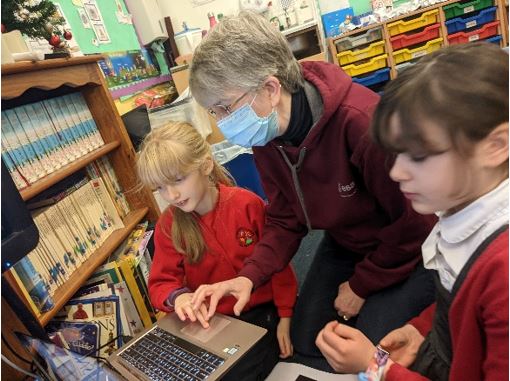
The schools also stand ready to respond quickly to requests for observations for new objects or where unusual activity is noted. Their quick access to the large telescopes of the Las Cumbres Observatory network of telescopes, through the Faulkes Telescope Project, really aids professional researchers who usually have to plan observations months in advance. The collaborations are certainly proving fruitful for everyone.
The project is about much more than just the scientific output though. The Comet Chasers team has been providing educational resources and hands-on support to teaching staff, allowing them to use the ‘Wow’ factor of space to engage and inspire learning across the curriculum. The enthusiasm of the teaching staff in each school, along with the support of BAA members, has been key to the project’s success so far.
The team would be very happy for other schools to join the Comet Chasers project too! Contact Helen Usher, helen.usher@open.ac.uk for more information.
]]>Okay, perhaps calculating the distance to your own thumb is not such an interesting activity to do, but what if you could use the same method to calculate the distance to an asteroid? That is exactly what students in Germany have been doing!
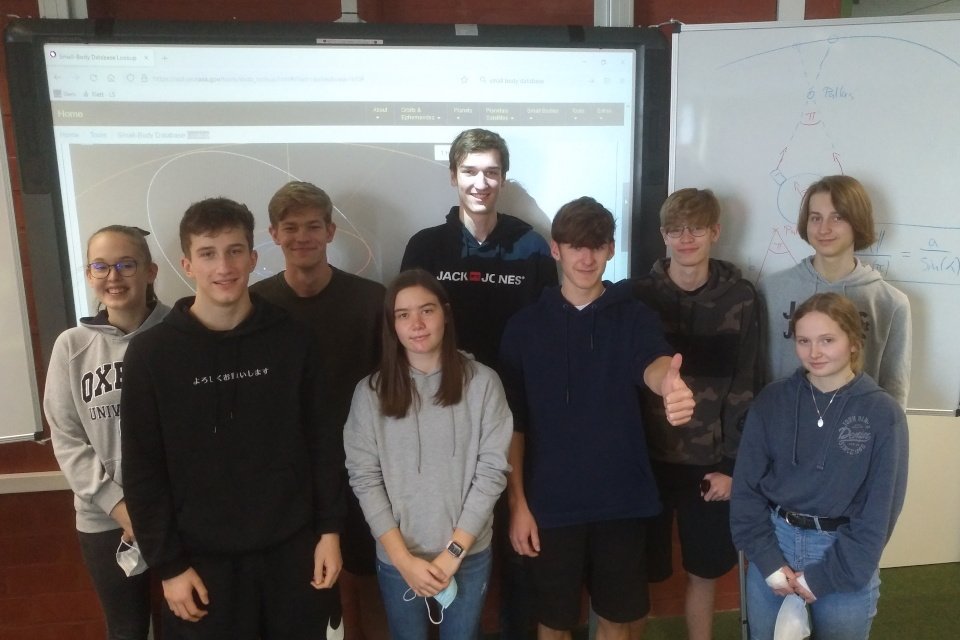
The students in Figure 1 accessed two telescopes at the same time, but at different sites within the LCO network, Cerro Tololo (Chile) and Haleakala (Hawai’i) to observe the asteroid, Pallas.
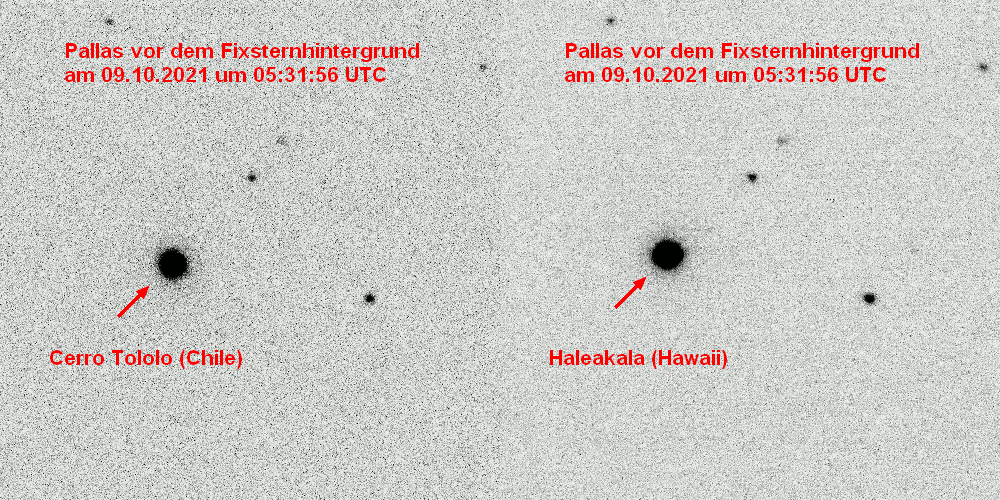
Figure 2 shows two of the students’ images where you can see how the asteroid ‘jumps’ in the field of view. The students were able to calculate the distance to Pallas within approximately 5% of the value that is recorded on NASA’s database!
You can read about their work in full here.
Thanks to Paul Breitenstein for sharing this fantastic work and story with us!
]]>During May and June 2021, two bright Novae appeared in the night sky. The first in Cassiopeia (Nova Cas 2021) and the second in Hercules (Nova Her 2021). A nova appears when a white dwarf in a binary system of stars accumulates sufficient gas from its companion star. As this gas accumulates, the newly added layers are subject to a rapid fusion process and cause a sudden rise in the brightness of the white dwarf that can be visible throughout the galaxy.
These transient events have proven ideal for educational projects, where the students perform the observations and afterwards, find the magnitude of the star by comparing its brightness with known, previously measured stars in the same field of view. Novae also bring some dynamics into astronomy and are evidence that even the Universe changes over time. White dwarfs themselves are interesting objects for the students to study, as it is the future and final state of our own star, the Sun.
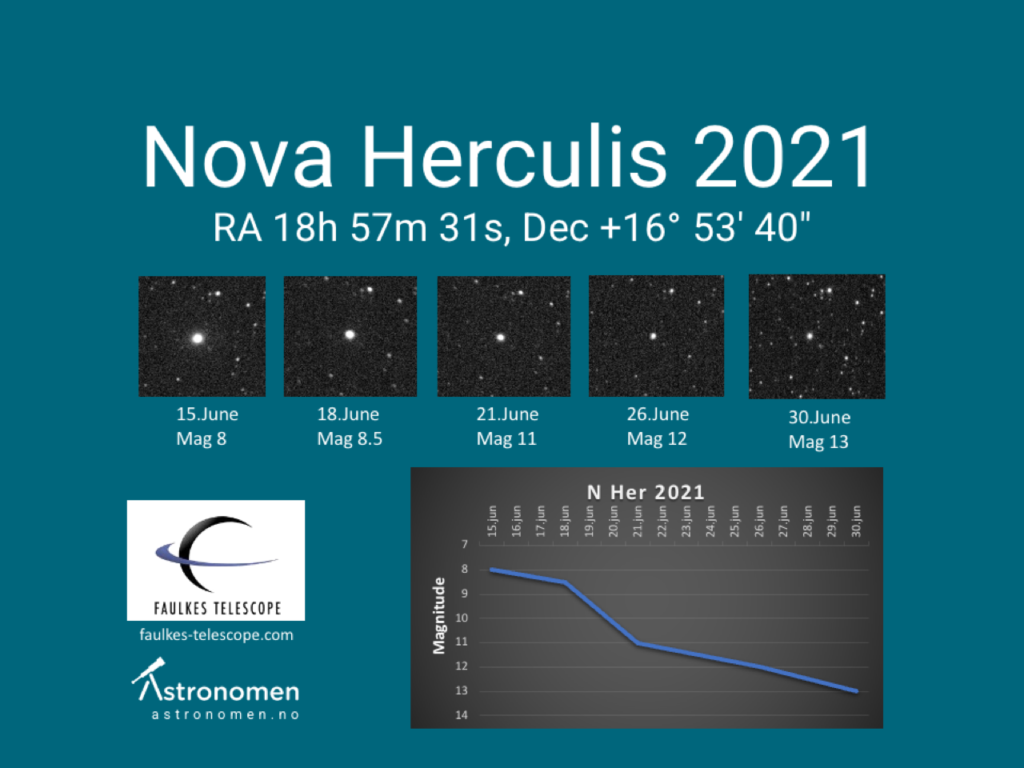
Teachers and students in Norway have been involved in measuring the light intensity of these stars during May and June 2021, and will probably follow the development of these stars throughout the summer. Figure 1 shows a series of their observations and their resulting light curve, clearly illustrating the changing brightness of the white dwarf.
Nova Cas 2021 was discovered by Yuji Nakamura in Japan on March 18th, just as the nova had reached magnitude +9.6. During the following days, the nova increased rapidly to +7.5 and +5.2 (lower numbers mean a greater brightness!), making it visible for naked-eye observations. Its position is RA 23h 24m 47.73s, Dec +61° 11’ 14.8” (J2000.0), which places it in the western parts of the constellation, Cassiopeia.
Nova Her 2021 was discovered on June 12th by Seiji Ueda in Japan. At the time it shone with magnitude +8.4 and after this, rose to +8 and +6.4. This means it is also observable with small telescopes, even in the light summer nights in the northern hemisphere. Its position is RA 18h 57m 31s, Dec +16° 53′ 40″ (J2000.0), which places it in the south-eastern corner of the constellation Hercules.
Only very few novae become bright enough to observe with the naked eye, while having the powerful instruments provided by the Faulkes Telescope Project at hand, teachers and students are now able to join in on the observations of those novae that are dimmer yet far more common.
]]>
By Mika Wawerzonnek
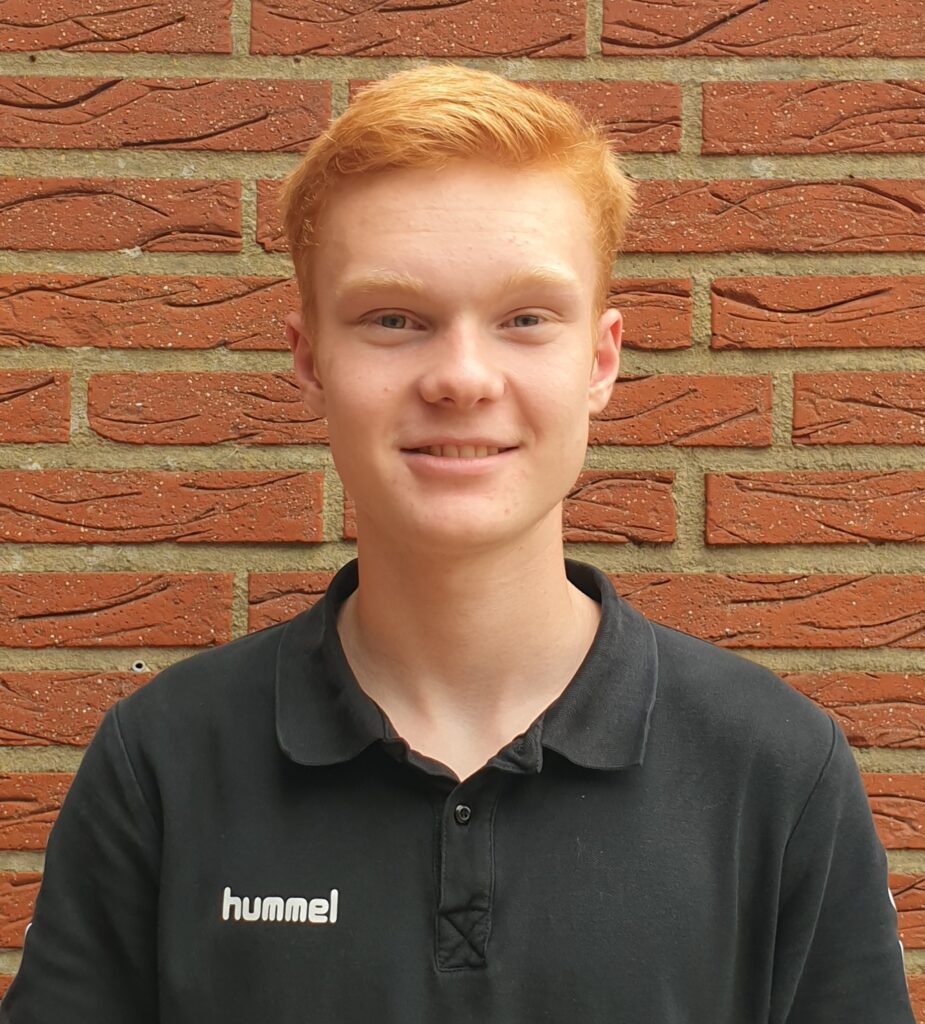
Mika Wawerzonnek, A 17-year-old 11th grade student studying at Ratsgymnasium Münster in Germany has been using the telescope network to complete his term paper (German: “Facharbeit”). The title of Mika’s paper translates to “Identification, Confirmation and Trajectory Tracking of Near-Earth Objects – Threats from the Cosmos”.
As part of his project, Mika has had intense involvement in the discovery of Near-Earth Objects (NEOs). Mika completed his observations using the Faulkes Telescopes and LCO network and analysed his observations using Astrometrica, a software which focuses on measuring small bodies in our Solar System, such as asteroids, comets and dwarf planets.
Mika then submitted his data to the Minor Planet Center (MPC) that is part of the Smithsonian Astrophysical Observatory (SAO). The MPC publishes a Near-Earth Object Confirmation Page and a Possible Comet Confirmation Page. Mika selected objects from these pages that were waiting to be confirmed as an NEO or discarded as a false report.
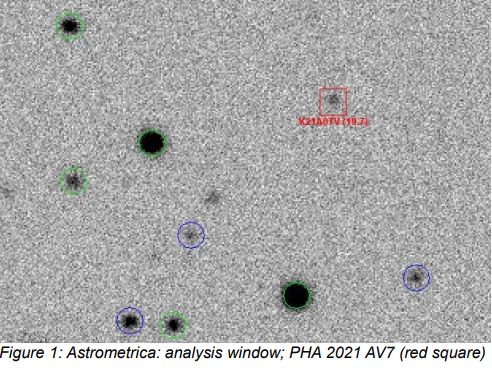
Throughout the duration of his project, Mika submitted approximately 30 MPC reports, 14 of which were confirmed as NEOs and Mika was mentioned in the Minor Planet Electronic Circulars that list the first observers who confirm the object until an official designation is assigned by the MPC. A list of the MPECs that Mika contributed to is provided at the end of this article.
Mika’s paper and numerous observations were invaluable, expanding the MPC data pool and assisting in making accurate predictions of orbits, thus helping to direct potentially dangerous objects.
Paul Breitenstein, one of Mika’s mentors commented: “Nowhere is it quicker and more impressive to see that space is dynamic than when observing asteroids and comets. With his work, Mika was able to actively participate in clearing the pathways of two minor planets, which were temporarily on the ESA’s Risk List.”
The fantastic report has been nominated for the Dr Hans Riegel Competition that aims to honours scientific work completed by upper secondary school students. Good luck, Mika!
List of Mika’s contributions and relevant webpages:
1) MPEC 2020-Y113 : 2020 YN3
https://www.minorplanetcenter.net/mpec/K20/K20YB3.html
2) MPEC 2021-A24 : 2021 AL
https://www.minorplanetcenter.net/mpec/K21/K21A24.html
3) MPEC 2021-A27 : 2021 AO
https://www.minorplanetcenter.net/mpec/K21/K21A27.html
4) MPEC 2021-A39 : 2021 AA1
https://www.minorplanetcenter.net/mpec/K21/K21A39.html
5) MPEC 2021-A99 : COMET C/2021 A1 (Leonard)
https://minorplanetcenter.net/mpec/K21/K21A99.html
6) MPEC 2021-A165 : 2010 AJ30
https://www.minorplanetcenter.net/mpec/K21/K21AG5.html
7) MPEC 2021-A195 : COMET C/2020 Y3 (ATLAS)
https://www.minorplanetcenter.net/mpec/K21/K21AJ5.html
8) MPEC 2021-A207 : COMET C/2021 A4 (NEOWISE)
https://www.minorplanetcenter.net/mpec/K21/K21AK7.html
9) MPEC 2021-B45 : 2021 AV7
https://www.minorplanetcenter.net/mpec/K21/K21B45.html
10) MPEC 2021-A210 : COMET C/2021 A6 (PANSTARRS)
https://minorplanetcenter.net/mpec/K21/K21AL0.html
11) MPEC 2021-A211 : COMET C/2021 A7 (NEOWISE)
https://minorplanetcenter.net/mpec/K21/K21AL1.html
12) MPEC 2021-B72 : 2021 BR1
https://www.minorplanetcenter.net/mpec/K21/K21B72.html
13) MPEC 2021-B119 : COMET C/2021 A9 (PANSTARRS)
https://www.minorplanetcenter.net/mpec/K21/K21B72.html
14) MPEC 2021-B120 : COMET C/2021 B2 (PANSTARRS)
https://minorplanetcenter.net/mpec/K21/K21BC0.html
15) MPEC 2021-C19 : 2021 AW11
https://www.minorplanetcenter.net/mpec/K21/K21C19.html
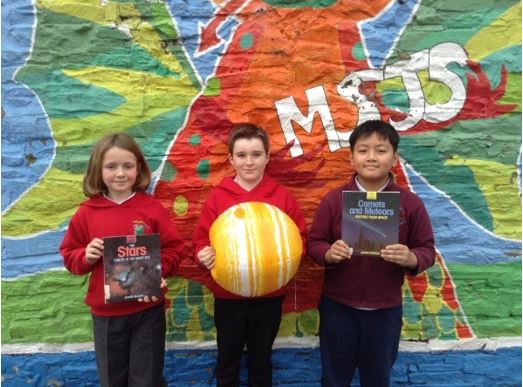
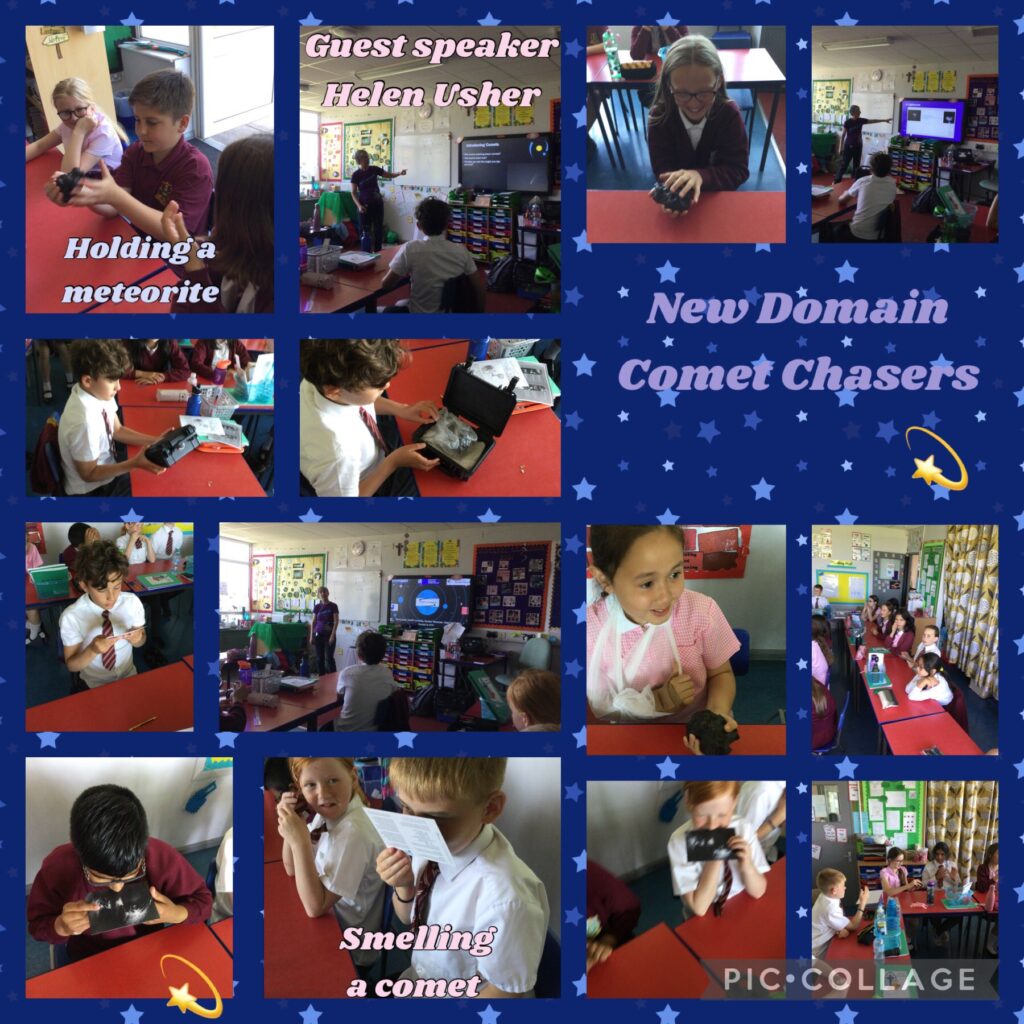
The school is getting stuck into the Comet Chaser project. The aim of the project is to deliver unique and engaging educational activities to primary schools that explore the observation and study of comets and other astronomical objects.
Check out the lovely images below of year 6 pupils getting their hands on some meteorites! They also spent the afternoon getting ready for the partial solar eclipse that occurred on the 10th June.
A secondary school in Oradea, Romania has taken some wonderful images using the Faulkes Telescopes and LCO Network. One of their physics teachers, Valentina Matei shared their story with us:
I teach physics for 12-14 years old students at “Dacia” Secondary School in Oradea, Romania. I teach Astronomy in extracurricular activities for 13 years old students in my school. I love astronomy and space science, so I took part in professional development programs in this domain. I also participated at “Honeywell Educators at Space Academy” program in July 2008 and 2011 (advanced level) at U.S. Space & Rocket Center in Huntsville, Alabama, USA, and “Astronomy Education Adventure in the Canary Islands”, July 2020 (online).
I use interdisciplinary teaching in order to increase students’ motivation and learning for science. Astronomy is part of our culture’s history and roots. For us, to study deep-sky objects as galaxies, nebula, star clusters, using high level telescopes from Hawaii and Australia, in the Faulkes Telescope Project is a dream come true.
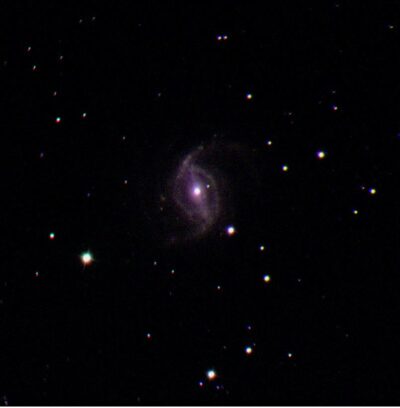
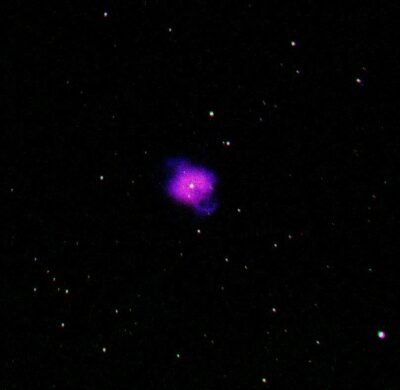
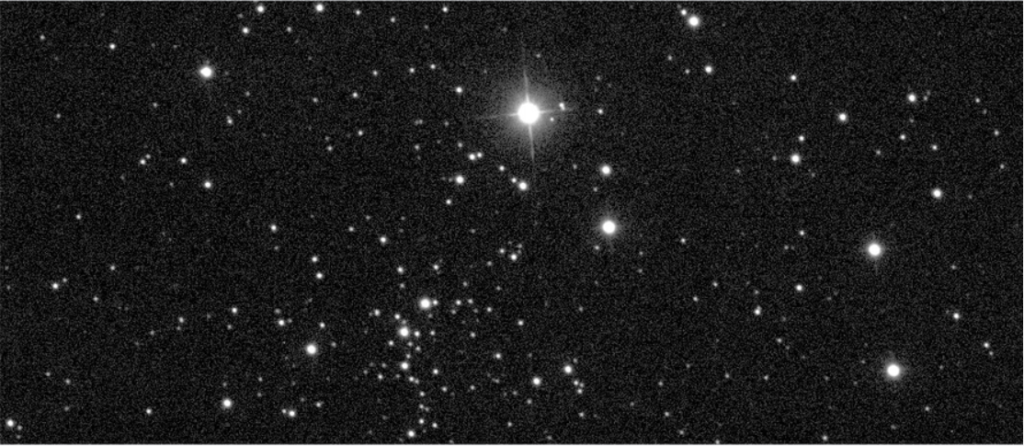
We tool pictures of galaxies, a nebula and star cluster. We used SalsaJ to display, analyse and explore these images. Our favourite picture is M47.
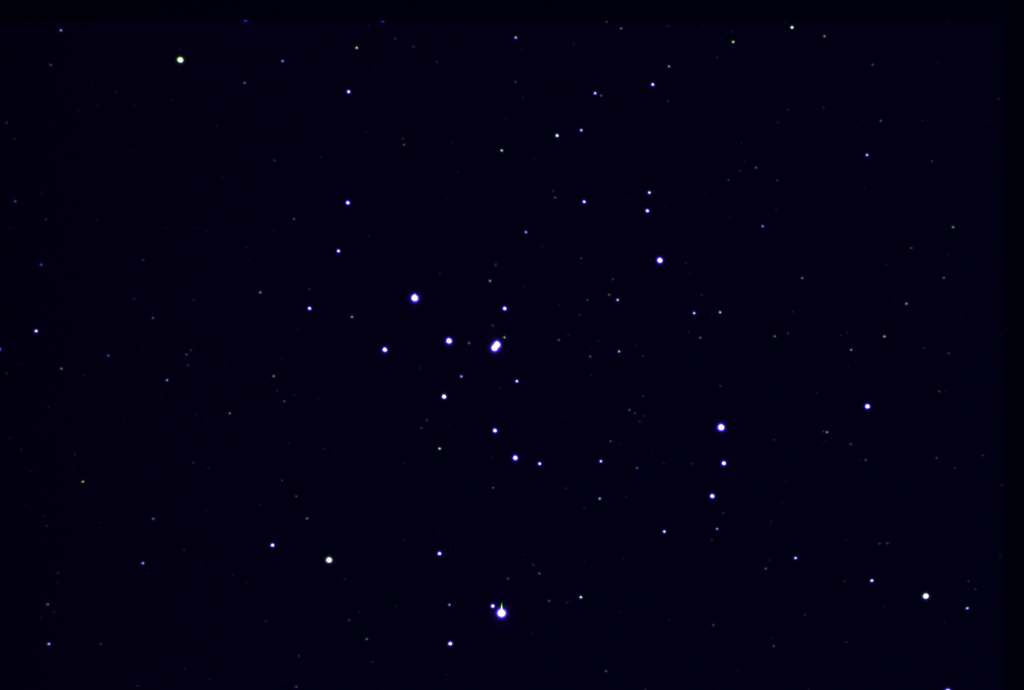
Studying the structure of our Galaxy is a challenging task. One of the ways to investigate the Galactic structure is through studying the properties of various classes of objects that populate the Galaxy. The formation and evolution of the Galaxy can be probed through open star clusters, which are groups of stars that formed from the same molecular cloud and have roughly the same age, distance and chemical composition.
Messier 47 (M47 or NGC 2422) is one of the least densely populated open clusters, located approximately 1600 light-years from our solar system, in the southern constellation of Puppis. The open cluster began their life around 78 million years ago and now cruising away from our solar system at a speed of 9 kilometres per second. An open cluster presents an opportunity for observing star colours. The blue colour of the brightest stars is an indicator of their temperature, with hotter stars appearing bluer and cooler stars appearing redder. The brightest stars of this cluster are spectral class B2 and magnitude 5.7. It also contains two orange K giants with luminosity of about 200 times that of the Sun.
The bright star nearest to the centre of Figure 2 is the fine double star, Sigma 1121 with components of magnitude both 7.8 and separated by 7.4 arc seconds.
Thank you for the opportunity to join this amazing project in order to discover the Universe!
________________________________________________
The Astronomy Education Adventures in the Canary Islands will be taking place again next year, this time in Tenerife! To find out more information and how to apply, visit the website here.
]]>
Neil Pacheco is the science subject leader at Kiveton Park Meadows Junior School in Sheffield, UK. Neil and his pupils have had some tremendous success with the Faulkes Telescope Project Real Time Interface! Here is what Neil had to say…
I am the science subject leader at my school and teach in Y5, where one of our science topics is space. We have been involved in the Tim Peake project where we had a stargazing evening. Unfortunately, this was hindered by bad weather. Using a grant from the institute of physics, I was able to purchase some telescopes. However, the after school club had the same children taking up the offer and my limited expertise meant that there were limited spectacular sights for the children to see.
This changed with the Faulkes telescope. With the whole class being able to participate was fantastic and the images the children and I saw were truly jaw dropping. Prior to the session, we discussed nebulas, galaxies and star clusters. For a novice such as myself, the list of galaxies, star clusters, nebulas made it easy to achieve awe-inspiring results. The children were hooked. I have been able to book 3 successful sessions (weather seems to effect stargazing efforts no matter what country the telescope is in), which children from three classes have been able to participate in with all the children and staff captivated by the stunning images. Some children were even able to see the action from home by joining in on a Google Hangout session.
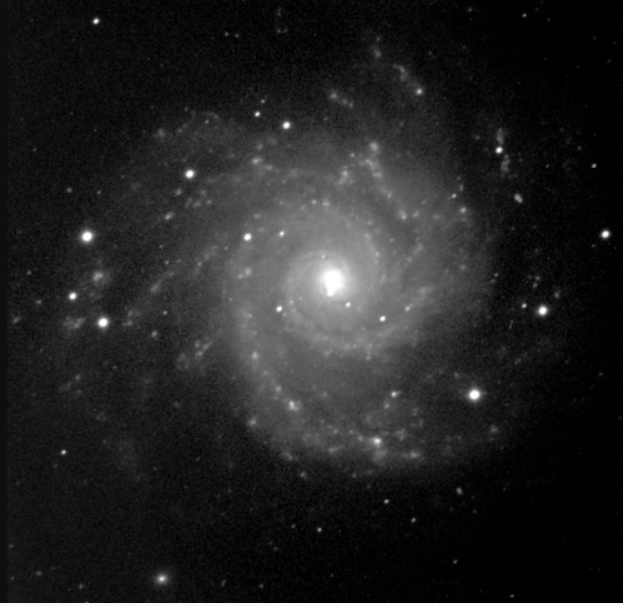
Besides the images, we looked at the location of the telescopes, the weather in the countries where the telescopes are located and the time difference, including the difference between UTC and GMT. Thank you so much for this amazing resource which I, the children and staff, have found amazing.
If you want to take a look at more of the fantastic images captured by Neil and his pupils, check out their school webpage here.