-
Faulkes Telescope Project Privacy Policy
Catch a Comet!
Comet 46P Comes Close to Earth and You Can Help Scientists Study it!
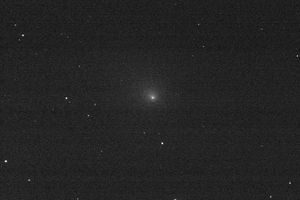
Comet 46P(Wirtanen) will shine brightly in December and January. It should be visible in binoculars and even with the naked eye.
We want you to make observations and help analyse that data. This will help us learn more about the comet’s: position, brightness, size, shape, activity and rotation.
Comet 46P/Wirtanen is a hyperactive comet which has activity levels higher than expected for its size. The reason for its brightness is that it is coming quite close to the Earth just after it has been closest to the Sun and so is at its most active.
These two things together mean it is a great comet to study… and you can help!
We are looking for schools to join us in a campaign of observations, coordinated by Helen Usher who is studying 46P (along with Rosetta’s comet 67P) as part of her PhD with the Open University and Cardiff University/Faulkes Telescope Project. She is also working with the European Space Agency Rosetta Mission team who are keen to showcase collaborations with schools and students.
If you’d be interested in taking part, contact Helen at: Helen.Usher@open.ac.uk.
Further information on this campaign, including classroom resources will be uploaded here over the next few days: http://resources.faulkes-telescope.com/course/view.php?id=150
Posted in News

© Faulkes Telescope Project