-
Faulkes Telescope Project Privacy Policy
Space Awareness in the Netherlands
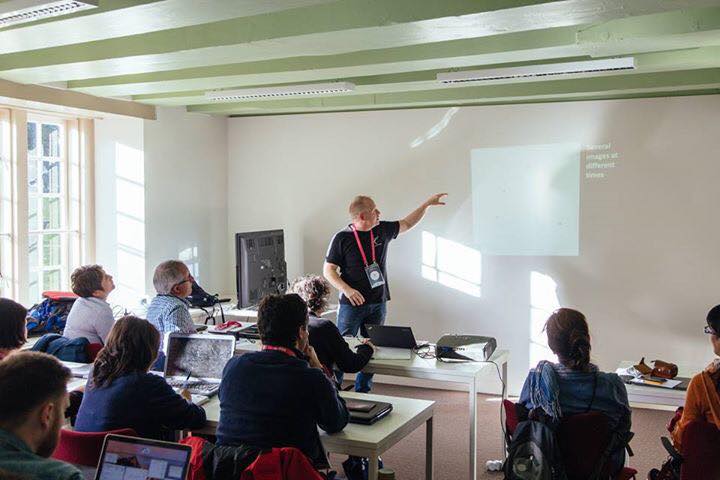
Last week, the FT team were in Leiden, the Netherlands taking part in a week-long, European teacher training workshop run by Space Awareness, the Galileo Teacher Training Program and the European Space Agency.
The event welcomed science teachers from around Europe to discover different ways of using astronomy and space science in the curriculum and also to demonstrate some of the work they have already done with their students.
For the FT team, the theme was Death, Destruction and Dinosaurs! The Wednesday saw the launch of the brand new edition of the Down2Earth Impact Calculator that now not only uses Google Earth but also the Moon and Mars. The new version allows students to explore how different surfaces, different atmospheres and different surface gravities influeences the consequences of an impact event. Check it out here.
Teachers were even able to hold some samples of meteorites that have been found on Earth. These are the oldest objects in the Solar System and are available for UK schools to loan via the Down2Earth project and the National Museum Wales. You can find more information here.

Paul also demonstrated how students can use the Faulkes telescopes to observe asteroids and comets when they’re still in their orbits around the Sun. Teachers were also shown some work from teachers at a previous workshop that decided to team up and observe an asteroid in turn. Together, schools from six European countries gathered enough data to produce a beautiful light curve.
You can find some of our educational resources based on asteroid and comet observations here.
Images courtesy of Wouter Schrier.
Posted in News

© Faulkes Telescope Project