Faulkes Telescope User Presented with Hauksbee Award by the Astronomer Royal.

ROYAL SOCIETY RECOGNISES Kerry Pendergast AS "UNSUNG HERO OF SCIENCE"

Kerry Pendergast, a long time user of the Faulkes Telescopes, was awarded a Royal Society Hauksbee Award on 10 March 2010, at a special reception held at the Society’s London headquarters. The Royal Society, the UK’s national academy of science, has created the new awards to recognise the unsung heroes of our science labs, research institutions and schools who work to support the UK science base.

The award was made as part of the Society’s 350th Anniversary celebrations this year. Ten recipients each received a Royal Society engraved bronze medal, scroll and £500 at the ceremony.

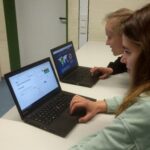
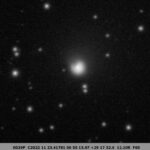
Kerry’s award was in large part due to his work with the Faulkes Telescopes on a range of projects. Kerry’s pupils at West Monmouth School have been using the Faulkes Telescopes to take and process images for their GCSE Astronomy coursework. They have imaged and named an asteroid, taken images of the supernova in M100 and taken images of the asteroid Metis, which was made into a short movie that was shown on’ The Sky at Night’ to illustrate how pupils could use the two Faulkes Telescopes.

Through the Faulkes Telescope Project, Kerry’s pupils gained access to Cambridge University’s Motivate Maths videoconferencing projects. West MonPupils took part in four long videoconferencing projects in all with Cambridge, which lasted for one year each. Two of these projects were astronomically themed on the Solar System and on Cosmology.

West Mon School’s long videoconferences with the Institute of Astronomy at Cambridge, gave Kerry the knowledge needed for Kerry to discuss the state of cosmology and the Big Bang Theory with the Astronomer Royal, Prof. Sir Martin Rees, after the Medal Ceremony. Kerry was also shown Isaac Newton’s manuscript for his famous book ‘Principia’, which ushered in the modern era of deterministic physics. Prof Rees is not only the present Astronomer Royal, but has also followed in Newton’s footsteps to become the President of the Royal Society.

Kerry’s long association with the Faulkes Telescope Project has opened up a new world of science for him and his pupils and great thanks are due to Dill Faulkes for having the foresight to fund and pioneer the use of robotic telescopes for school children. The awards recognise and reward those in roles that support UK science, technology, engineering and maths for their excellent work and achievements. Recipients include laboratory technicians, teachers, teaching assistants and many more. The awards are named after Francis Hauksbee who was Isaac Newton's laboratory assistant at the Royal Society. During his time as President, Newton appointed Hauksbee as curator and instrument maker, and Hauksbee later became a Fellow in his own right in 1705.

Professor Carol Robinson FRS, who chaired the Hauksbee Awards Committee which selected the recipients said:
“Many laboratories and science classrooms could not operate but for the dedication and skill of individuals working behind the scenes. These people are devoted to their fields and inspire all around them. The Hauksbee Awards are a way for us to take note of the excellent work being done by these individuals and thank them for their invaluable contribution to the sciences.”